Flores Island

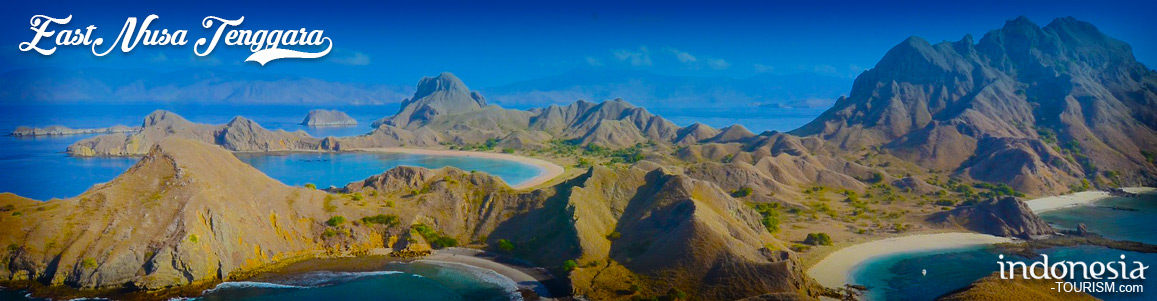
Flores, a long island located between Sumbawa and Timor, is strewn with volcanoes in a mountain chain dividing it into several regions with distinctive languages and traditions, scenic beauty, good beaches, and natural wonders. The name is Portuguese for "flower", as the Portuguese were the first Europeans to colonize East Nusa Tenggara.
Occupying a unique position at the junction of the Australian and Asian submarine ridges, between the two distinct fauna regions marked by the Wallace Line, here is one of the world's most dynamic marine environments with nearly every species of coral and tropical fish represented. Predominantly Catholic, there are several examples of its Portuguese cultural heritage like the Easter Procession held in Larantuka, and the royal regalia of the former king in Maumere.
Flores Island, 6,627 sq mi (17,164 sq km), of Indonesia, is one of the Lesser Sunda Islands. Flores is heavily wooded, rugged, and mountainous, rising to 7,872 ft (2,399 m). The inhabitants are predominantly Christian, mainly Roman Catholic; those in the west are chiefly Malayans, and those in the east are Papuans. Corn and coconuts are grown. Ende (1990 pop. 48,966) is the chief town and port.
Among the prehistoric inhabitants of the island were small-proportioned humans (classified as Homo floresiensis in 2004) that may have evolved from Homo erectus and lived on Flores as recently as 13,000 years ago. Some scientists, however, believe that remains are those of micro cephalic modern humans who also suffered from dwarfism. Much later under the rule of Sulawesi princes, Flores came under Dutch influence c.1618. The Dutch gradually gained control of the island, although Portugal held the eastern end until 1851 and the natives were not completely subjugated until 1907.
Flores is one of the Lesser Sunda Islands, an Island arc with an estimated area of 14,300-km_ extending east from Java island of Indonesia. The largest town is Maumere. Flores is located east of Sumbawa and Komodo and west of Lembata and Alor archipelago. To the southeast is Timor. To the south, across the Sumba strait, is Sumba and to the north, beyond Flores Sea, is Sulawesi.
Administration
Flores is part of the East Nusa Tenggara province. The island is split into five regencies (local government districts); from west to east these are: Manggarai, Ngada, Ende, Sikka and Flores Timur.
Geography
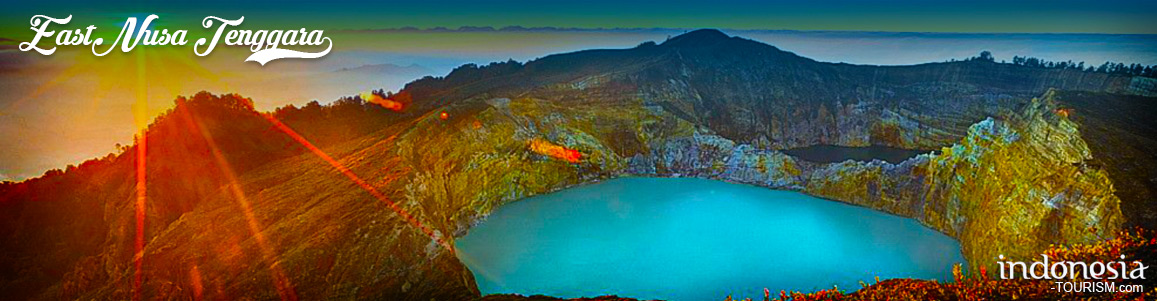
Flores has several active and dormant volcanoes, including Egon, Ilimuda, Leroboleng, and Lewotobi.
Flora and fauna
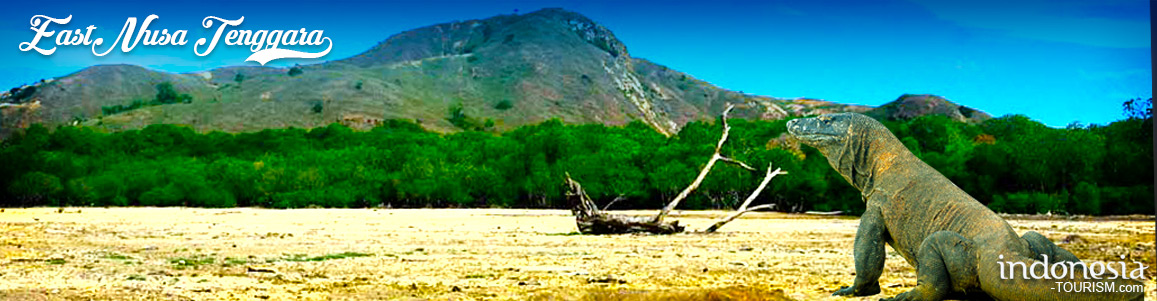
The west coast of Flores is one of the few places, aside from the island of Komodo itself, where the Komodo dragon can be found in the wild. The Flores giant rat is also endemic to the Island. In September 2004, at Liang Bua Cave in western Flores, Paleoanthropologist discovered skeletons of a previously unknown hominid species. Homo floresiensis, affectionately termed hobbits after the small characters in the Lord of the Rings, appear to be miniaturized versions of Homo erectus standing about one meter tall. They may have existed until as recently as 11.000 BC. Local reports of elf people, the Ebu Gogo, or the Orang Pendek of Sumatra, have caused speculation that Flores man may have survived into the historical period, or even to the present. The discovery has been published in the October 28, 2004, issue of Nature magazine. Flores was also a habitat of the extinct Stegodon dwarf elephant until approximately 18,000 years ago.
Culture
There are many languages spoken on the island of Flores, all of them belonging to the Austronesian family. In the centre of the island in the districts of Ngada and Ende there is what is variously called the Central Flores Dialect Chain or the Central Flores Linkage. Within this area there are slight lingistic differences in almost every village. At least six separate languages are identifiable. These are from west to east: Ngada, Nage, Keo, Ende, Lio and Palu'e, which is spoken on the island with the same name of the north coast of Flores. Locals would probably also add So'a and Bajawa to this list, which anthropologists have labeled dialects of Ngadha. Portuguese traders and missionaries came to Flores in the 16th century, mainly to Larantuka and Sikka. Their influence is still discernible in Sikka's language and culture.
Flores is almost all Catholic and represents one of the "religious borders" created by the Catholic expansion in the Pacific and the spread of Islam from the west across Indonesia. In other places in Indonesia, such as in Maluku and Sulawesi, the divide is more rigid and has been the source of bloody sectarian clashes.

Planning Your Wonderful Trip to Labuan Bajo And Komodo Island
Indonesia has thousands hundreds of islands. That is a very amazing fact because Indonesia is indeed an archipelagic country. Several islands in Indonesia are uninhabited but are still frequently visited by many tourists. This is because all the islands in Indonesia have their charm, have beautiful beaches, and are unique in their own right. Of all the islands owned, the only island inhabited by ancient animals is the Komodo dragon which can be visited by tourists. If you are looking for an all-in-one adventure experience, see Komodo dragons in their…
The Uniqueness of Koja Doi Tourism Village in East Nusa Tenggara
Koja Doi Village is located in East Alok sub-district, Sikka Regency, East Nusa Tenggara (NTT). Visitors can access this village by boat with a travel time of about 40 minutes from Nangahale Harbor. Koja Doi is one of the tourist villages that won the Indonesia Sustainable Tourism Award (ISTA) from the Ministry of Tourism and Creative Economy. This village offers marine tourism, nature tourism, and cultural tourism. Koja Doi Village has several spot to visit, such as the site of the 1992 tsunami, a stone bridge, ancient rock hills, and…
Enjoying the Enchantment of Marosi Beach in West Sumba
West Sumba has a number of beaches that are destinations and attractions for its tourism sector. One of them is Marosi Beach. This beach is located in Lamboya District. You don’t need long from Waikabubak to the location. Enough to travel overland for approximately one hour. In fact, you are also not charged a levy when entering this beach area. Marosi Beach is a beach that is completely empty of visitors. This is a recommended place for those of you who want to get rid of boredom from tired activities.…
Exploring Aili Beach in Central Sumba
Aili Beach in Central Sumba Regency, East Nusa Tenggara Province No one can deny the values of natural attractions like beaches, no? When it is about beautiful beaches, East Nusa Tenggara Province has many of them including the one called Aili Beach of Central Sumba Regency. To be exact, the location is in Konda Maloba Village and it resides in South Katikutana Sub-District. Like other beaches of NTT Province, this one is recognized for its pristine nuance and beautiful white sand. The good thing is that it resides in the…