

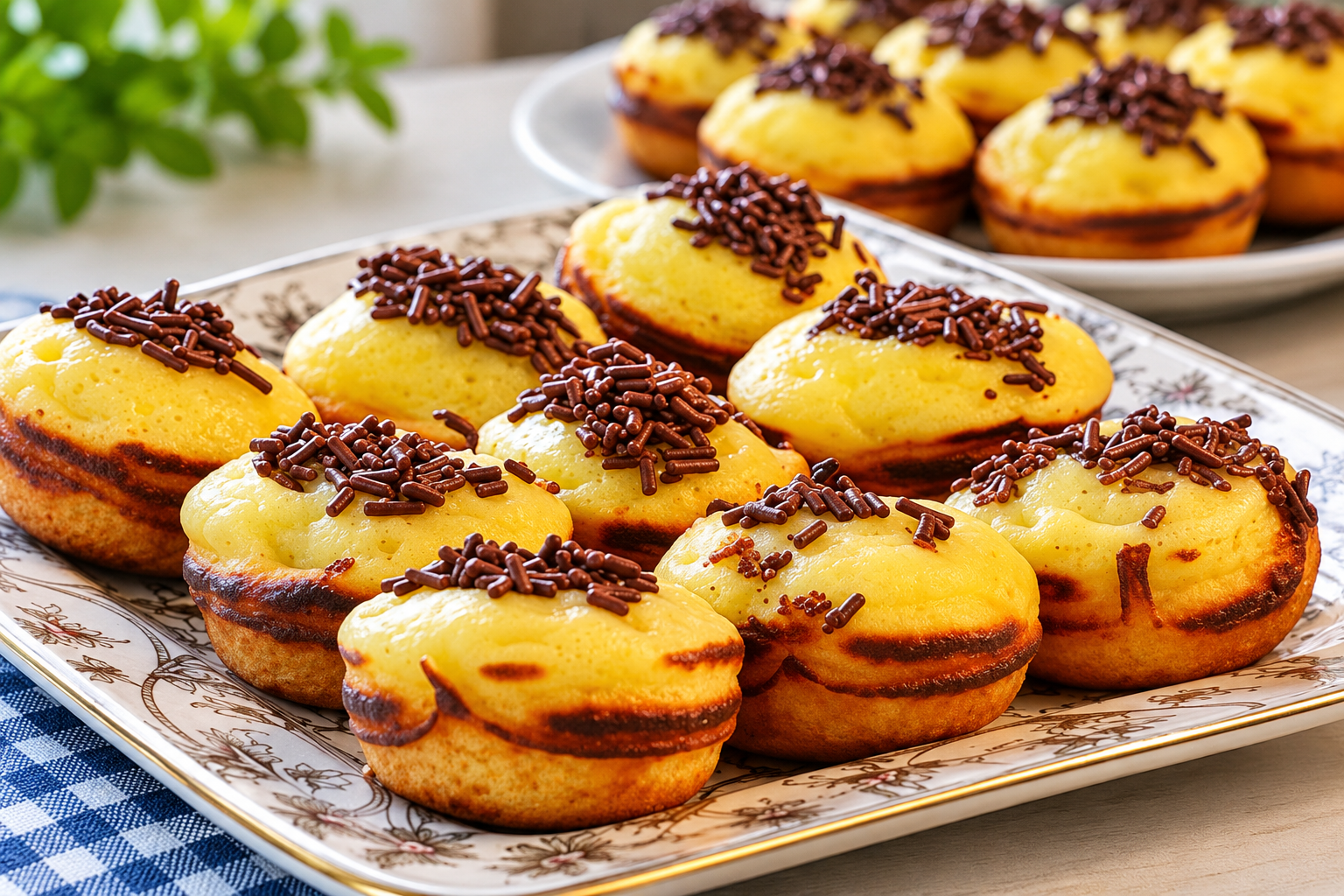
For many people, kue cubit brings back memories of snack stalls outside the school gates: small, golden cakes cooked in tiny molds and topped with chocolate sprinkles or grated cheese. They’re simple and sweet, and watching them cook is half the fun.
But behind its familiar look as a local street snack, kue cubit has a longer story to tell. It’s often linked to Dutch culinary influence, particularly poffertjes, the mini pancakes that are also made in a special dimpled pan.
So why are the two so alike? Is there a story behind it?
The Dutch Roots of Kue Cubit
The similarity is easiest to spot the moment a vendor pours the batter. Just like kue cubit sellers, poffertjes makers use a pan with rows of small indentations, so a whole batch of bite-sized treats can be served in one go. According to SBS Food, poffertjes is considered one of the Dutch snacks believed to have influenced Indonesia’s kue cubit.
In Betawi food tradition, kue cubit is often tied to the influence of Dutch poffertjes. The two snacks have their own distinct character, even though they’re cooked in similar ways, from the batter to how they’re served.
When making poffertjes, the cook flips each little pancake one by one in the pan. Once they’re done, these mini pancakes are typically served right away, dusted with powdered sugar and topped with butter that slowly melts over them.
Kue cubit takes a different approach. While the surface of the batter is still wet, the vendor sprinkles on chocolate sprinkles or adds other toppings, then covers the pan until the cakes are cooked through.
The ingredients differ, too. Poffertjes batter is made from a blend of all-purpose flour, buckwheat flour, and yeast, while kue cubit is usually made with all-purpose flour and baking powder.
And here’s a fun fact: if you already have a poffertjes pan at home, you can use it to make kue cubit as well!