
Cirebon

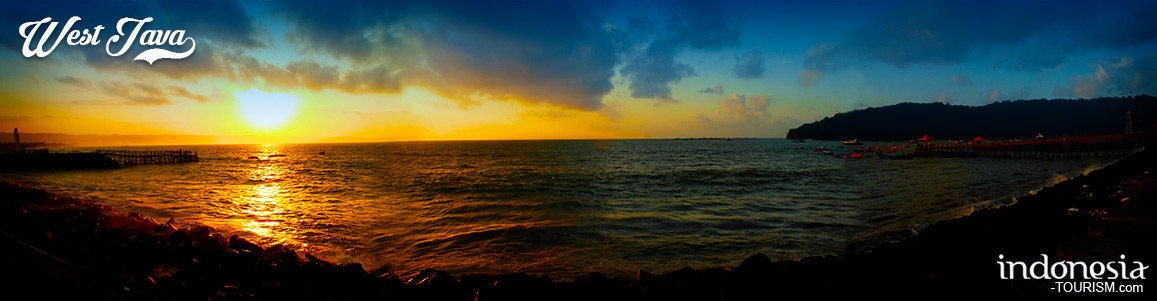
Traveling northeast from Bandung towards the coast, the seaport of Cirebon offers a wealth of culture and history. Situated on the border of West and Central Java, it is home to a combination of both cultures. Gemah Ripah Loh Jinawi means a prosperous city that has many people. Cirebon is actually located at the north coast of Java. It is located at West Java. Cirebon has a great resource of sea, especially shrimps. These shrimps are exported abroad to get so much income for city development and education. This city is almost always be passed every time any one wants to go to West Java or Jakarta from Central Java and any east cities of Java. The location of Cirebon is very strategic. In the Indojavanese time it was the most important harbor of the mighty Galuh kingdom, of which the capital was located in the fertile of Citanduy River, not too far away from Ciamis. The harbor also opened the way to the Cimanuk River, which flows through Sumedang to the lake basin of Bandung. Because the coasts of Western Java are swampy and in some places rocky Cirebon and Sunda Kelapa (Jakarta), together with Banten in the far West, the main entries to the blooming highlands.
Cirebon at 14th was a part of Padjajaran Kingdom. The Moslem movement there was so fast and Padjajaran commanded to remove the settlement to Lemahwungkuk, 5 kilometers from Cirebon harbor. In the city itself; the ancient palace (keraton) of Kasepuhan and Kanoman now serve as museums which are open to the public, exhibiting household ornaments, paintings, calligraphy and other art treasures of the courts. The royal carriages are sumptuous in design, one of them a gilded coach in the form of a winged elephant. The three well-known palaces (Kraton) of Cirebon are Pakungwati, Kesepuhan, and Kanoman. The former is the earliest of the three and has said to be occupied by Sunan Gunung Jati himself. In fact, according to the records preserved within the Kesepuhan Palace, and firmly believed by the Cirebon people, the normally accepted account of Sunan Gunung Jati's life is incorrect. Syarif Hidayatullah was, they claim, the son of an Egyptian King and a Sundanese princess. He lived until the age of 120 and died in 1568 A.D.
Across the square from the Kasepuhan Kraton is "Mesjid Agung" (Grand Mosque), in a traditional Javanese style and made entirely of wood. There is an ancient royal cemetery where a holy sultan was buried which has become a place for pilgrimage at the Astana Gunung. Jati Cirebon is also known for its distinct batik, now a flourishing industry in Trusmi village. The local seafood is among the best in West Java. Another specialty this city can offer the visitor is a wide range of seafood, probably the best in West Java.
Nowadays Cirebon is on the crossing of a busy coastal road and the main road to Bandung. The harbor, main depot for the oil from the Java Sea, is famous for it's great catches of fish and other sea animals. Cirebon means 'River of Shrimps' and the city has a nickname 'Kota Udang', 'City of the big Shrimps'; historical sources tell us that the name of the city is probably diverted from caruban, which means 'mixture' - a witness of the very heterogeneous heir of Cirebon.

Bogor Botanical Garden Collections
In the Journal of Nature (a scientific journal of high repute), Mounce et al (2017) revealed, widely that Botanical Gardens around the world have collected at least 105,634 species or equivalent to 30% of all known plant diversity worldwide. However, it was also disclosed that there are an estimated 75% of species that have not been conserved in the tropics. Therefore, the Bogor Botanical Gardens which incidentally located in the tropics and are included in the oldest botanical gardens in Southeast Asia, must be able to answer the conservation challenges…
History of Bogor Botanical Gardens
The Bogor Botanical Gardens are the only natural destination in the middle of Bogor city with 87 hectares area. The transportation support capacity is very adequate to access this tourist location. Easy toll access and public transportation access are widely available, which are added values ??for the existence of this tourist location. The existence of the Bogor Botanical Gardens itself cannot be separated from the historical value of the existence of the Dutch in the colonial period, where it is known that the Bogor Botanical Gardens was founded by the…
Ranca Upas, Camping Place in Bandung
Ranca Upas is one of the tourist destinations in Bandung. Here you can camp while looking at the herd of deer and stunning scenery. Ranca Upas is a tourist spot located in Rancabali District, Bandung Regency, West Java. Ranca Upas is also known as campground, which is a favorite place for nature lovers. At Ranca Upas you can camp in the meadow on a hill of about 1700 meters above sea level. The view in the morning really amazes like being abroad. Moreover, the cool air makes the atmosphere more…
3 Most Popular Waterfalls in West Java
Last year, the waterfall or in local language called as ‘curug’, became a very popular tourist destination for tourists. Its presence in remote areas makes tourists more curious and feels challenged to reach it. Local waterfalls are also crowded because at that time Indonesian citizens were hit by boredom due to the Corona virus pandemic which forced them to cancel their vacation plans. West Java is not only famous for its beautiful beaches and mountains. The area, which is divided into 18 districts and nine cities, also has tourism potential…