Banda Island
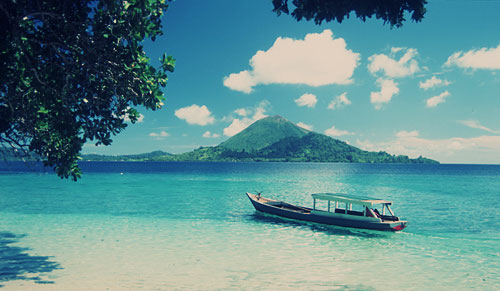
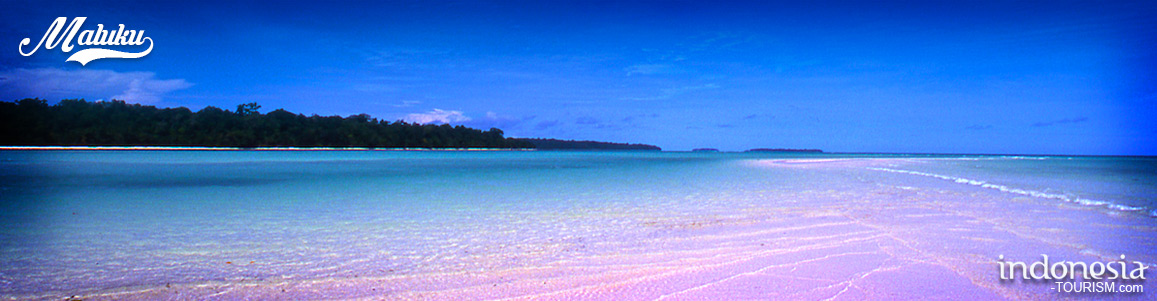
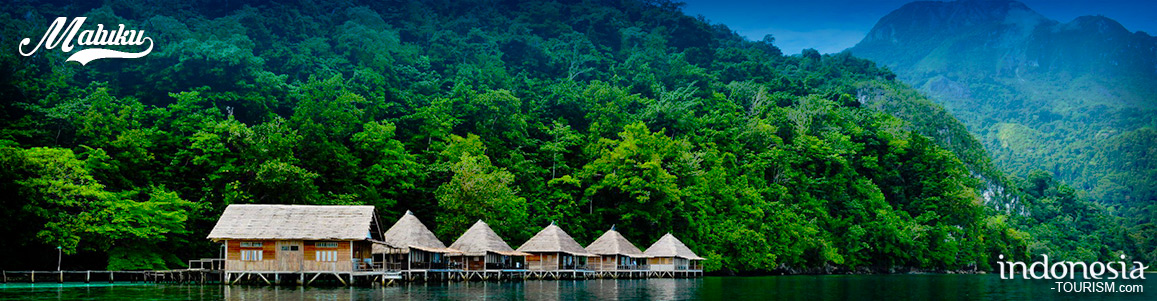
The Banda group, about 160 kilometers southeast of Ambon, consists of three larger islands and seven smaller ones, perched on the rim of Indonesia's deepest sea, the Banda Sea. Near Manuk Island, the water reaches more than 6,500 meters depth. Of the three biggest islands Banda, Banda-Neira and Mount Api, the first two are covered with nutmeg trees and other vegetation. The third however, is entirely bare and highly volcanic. The last eruption of Mt. Api occurred only a few years ago. The seas around Banda are the sites of the famous Maluku sea gardens with their bright corals and colorful fish darting through the crystal-clear waters. Facilities for sightseeing, snorkeling and skin-diving are available, as well as clean, comfortable cottages.
Banda saw some of the bloodiest episodes of Maluku's past history during the 17th century. In 1609, the Dutch East Indies Company (VOC) dispatched Verhoeff to the islands to obtain the contested spice trade monopoly at any cost. Confronted by a superior power, people Banda were forced to allow the company to establish a fort, but in that same year Verhoeff was killed together with 45 of his men. The Company retaliated, but peace was not restored. In 1619, V.O.C. Governor-General Jan Pieterszoon Coen arrived at the head of a penal expedition and exterminated the entire population of Banda. The land was divided into lots, called "perken”, and given to former company employees, the "perkiniers", who were obliged to grow nutmeg and sell them at predetermined prices to the company. Slaves did the actual work in the fields. The old "perkenier houses", or what is left of them, and old churches still retain a peculiar colonial character to the port town of Bandaneira today. Two old forts Belgica and Nassau are inside the town limits. Others are found elsewhere on the islands. See also the former Dutch Governor's mansion, the History Museum in Neira, and the huge nutmeg plantation nearby.

The Monument of Martha Christina Tiahahu, Remembering the Brave Girl from Maluku
The Martha Christina Tiahahu Monument is located in the Karang Panjang area, about 10 minutes from downtown Ambon. Because the location of the monument is at elevation, the tourists can watch the sparkling expanse of Ambon City glittering at night. From this place, the high seas can be seen clearly. We can see the view of Ambon City. This location is usually used as an alternative place to enjoy the relaxed atmosphere, especially young people who want to enjoy the view of Ambon City. Historically, Martha Christina Tiahahu grew up…
Belgica Fortress, Maluku
Benteng Belgica or Belgica Fort is a heritage fortress from Portuguese that been built in Bandaneira, Maluku Tengah. Bandaneira is a small town that also a heritage city from Portuguese and Duch colonization. This city became important city for Dutch and Portuguese since it produce some of important spices. Since Bandaneira was the center of trading, then the building of fortress is need to be built. This fortress was also play the role as a prison and the place for keeping the gun. At early begin, Belgica was named as…
Pampering Yourself At Liang Beach, Ambon
Beaches in Ambon are known well for their beauty. The visitors are not as crown as those who come to pulau Bali or Lombok, but that makes beaches in Kota Ambon still in original and natural condition. One of the favorites is Hunimua Beach. Though the facilities are yet not complete. This beach is also known as Liang Beach for it’s located in Liang village, Salahutu sub-district, Central Maluku district, Maluku Province. UN has stated this beach as the most beautiful beach in Indonesia in 1990, and always been target…
Sawai Village, Maluku
Village of Sawai, Maluku, is one of destinations in the Manusela National Park. The waters are calm and clean. This tourism village has the same beauty with other islands in Indonesia. This village is famous for its beaches and sea. Most of the sea in the this village is still natural and well preserved. Sawai village is including the oldest villages in Maluku and it has several small islands surrounding it. These islands are also adds to the beauty of the Sea of ??Sawai. What is unique of this village…