Bali
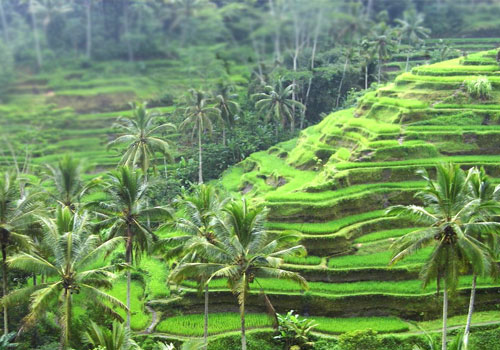
Geographically
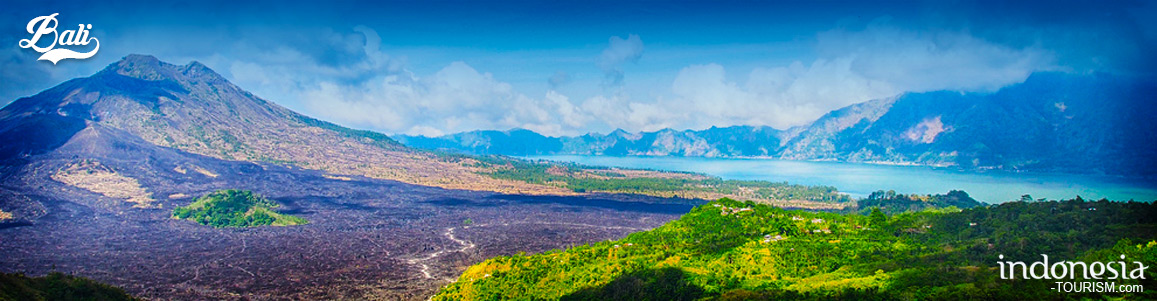
Bali is volcanically active and extravagantly fertile. Bali has an area of 5620 sq km, measures approximately 140 km by 80 km and is just 8 degrees south of the equator. Mount Agung known as the 'mother mountain' is over 3000 meters. South and north of the central mountains are Bali's fertile agricultural lands. The southern region is a wide, gently sloping area where most of Bali's abundant rice crop is grown. The south-central area is the true rice basket of the Island. The northern coastal strip is narrower, rising more rapidly into the foothills of the central range, but the main export crops, coffee, copra and rice, are grown here. Cattle are also raised in this area.
Climate
Bali has a climate that is tropical all year. The average temperature hovers around 30 degrees Celsius year-round. There are dry and wet seasons -dry from April to September and wet from October to March- but it can rain at any time of year and even during the wet season rain is likely to pass quickly. In general May to August are the best months in Bali. At that time of year the climate is likely to be cooler and the rains lightest. Around the coast, sea breezes temper the heat and as we move inland we also move up so the altitude works to keep things cool. It can get very cool up in the highlands and a warm sweater can be a good idea in mountain villages like Kintamani or Bedugul.
Population
With 2.5 million people, Bali is a very densely populated island. The population is almost all Indonesian, with the usual small Chinese contingent in the big towns, a sprinkling of Indian merchants, plus a number of more or less permanent visitors amongst the Westerners in Bali.
Culture
Each stage of Balinese life is marked by a series of ceremonies and rituals known as Manusa Yadnya. They contribute to the rich, varied and active life the average Balinese leads. There are ceremonies for every stage of Balinese life but often the last cremation ceremony is the biggest. A Balinese cremation can be an amazing, spectacular, colorful, noisy and exciting event. In fact it often takes so long to organize a cremation that years have passed since the death. During that time the body is temporarily buried. Of course an auspicious day must be chosen for the cremation and since a big cremation can be very expensive business many less wealthy people may take the opportunity of joining in at a larger cremation and sending their own dead on their way at the same time. Brahmans, however, must be cremated immediately. Apart from being yet another occasion for Balinese noise and confusion it's a fine opportunity to observe the incredible energy the Balinese put into creating real works of art which are totally ephemeral. There are a lot more than a body gets burnt at the cremation. The body is carried from the burial ground (or from the deceased's home if it's an 'immediate' cremation) to the cremation ground in a high, multi-tiered tower made of bamboo, paper, string, tinsel, silk, cloth, mirrors, flowers and anything else bright and colorful we can think of. The tower is carried on the shoulders of a group of men, the size of the group depending on the importance of the deceased and hence the size of the tower. The funeral of a former rajah high priest may require hundreds of men to tote the tower.